Money

The History of Currency

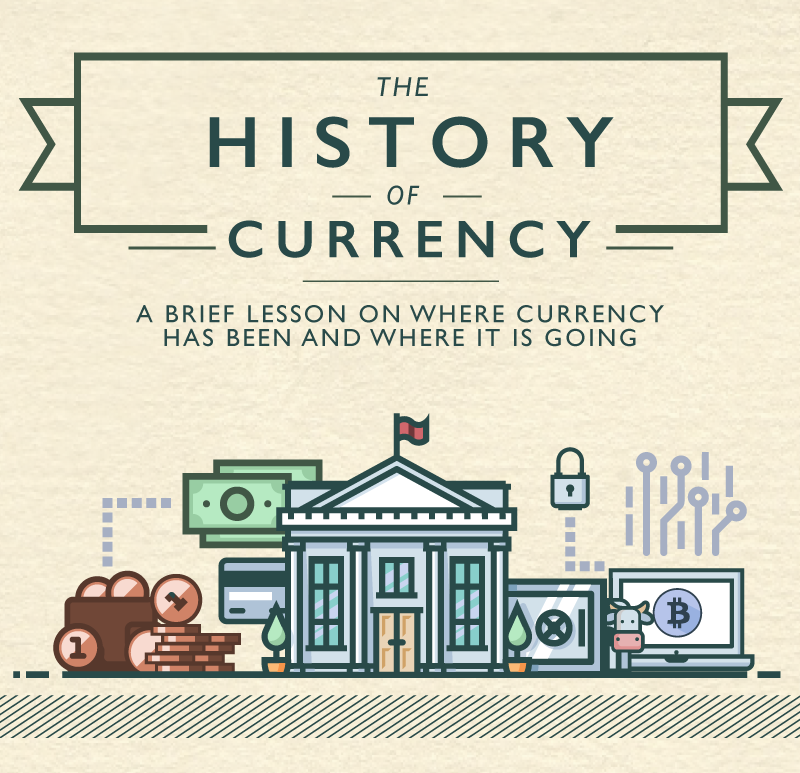
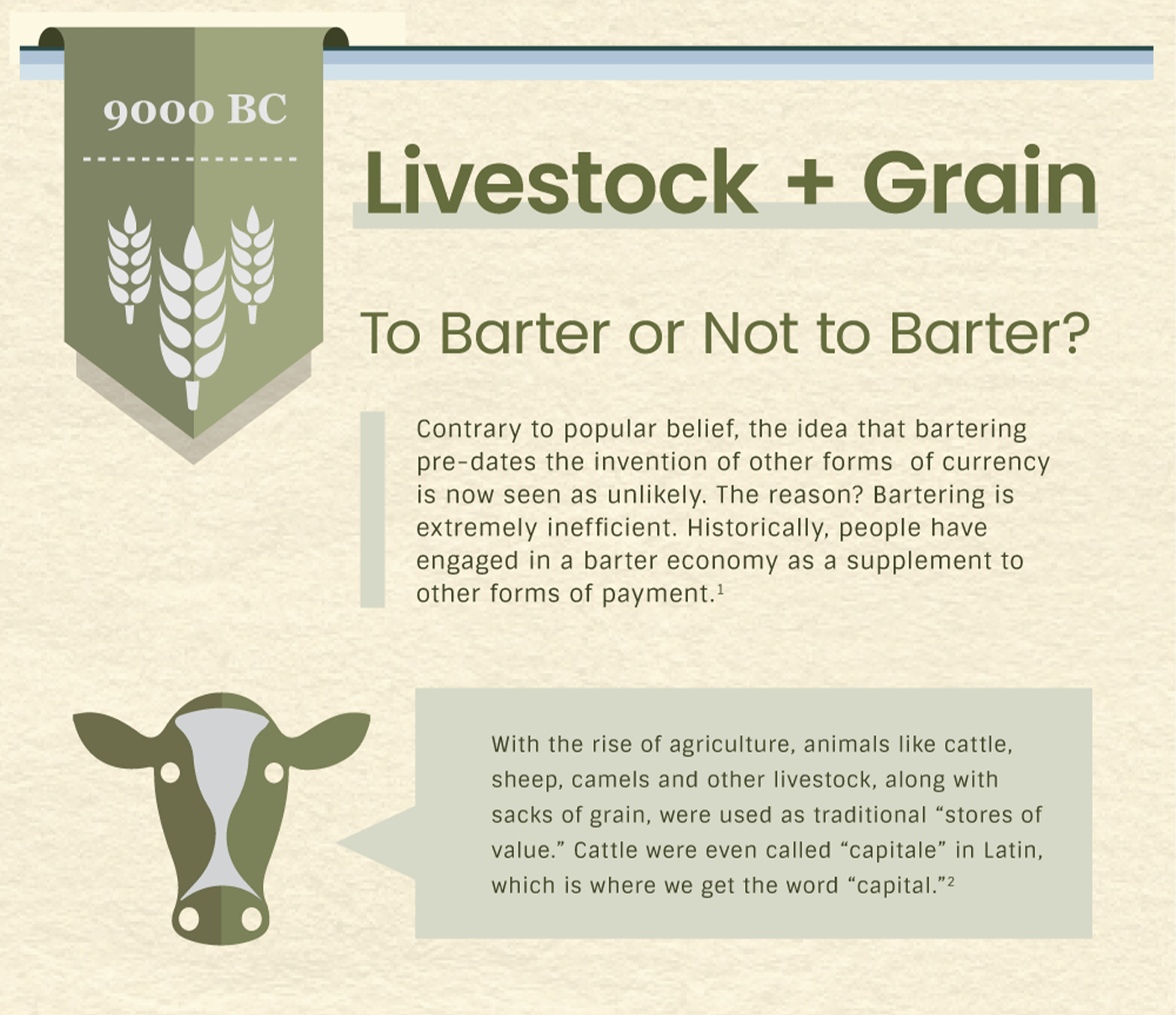
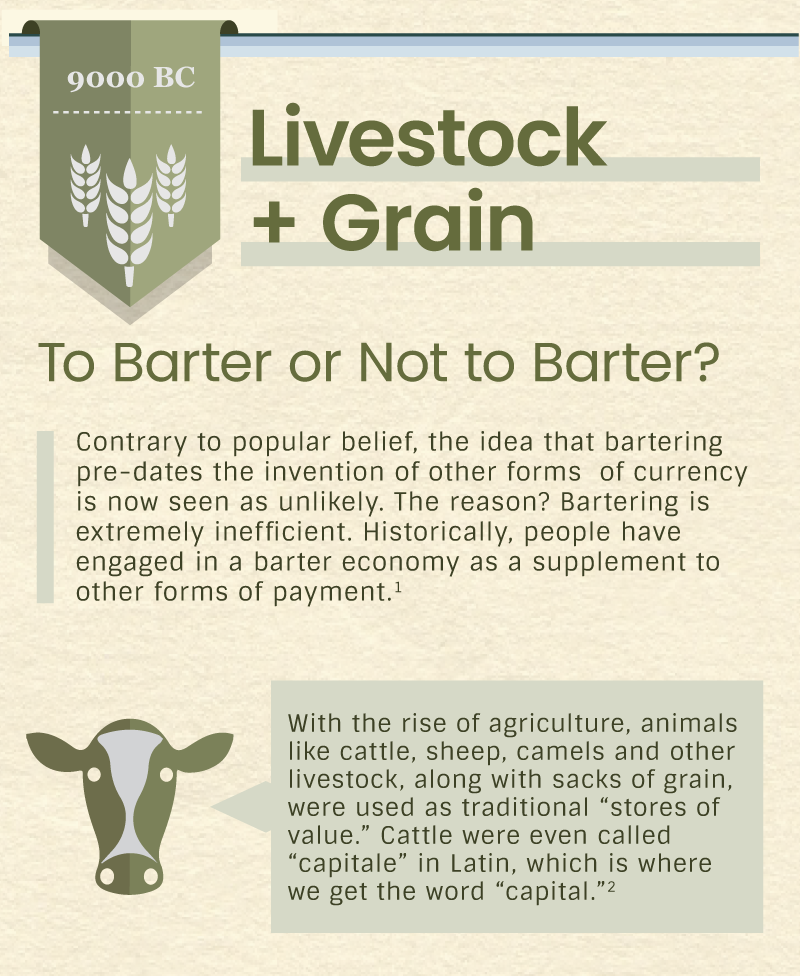
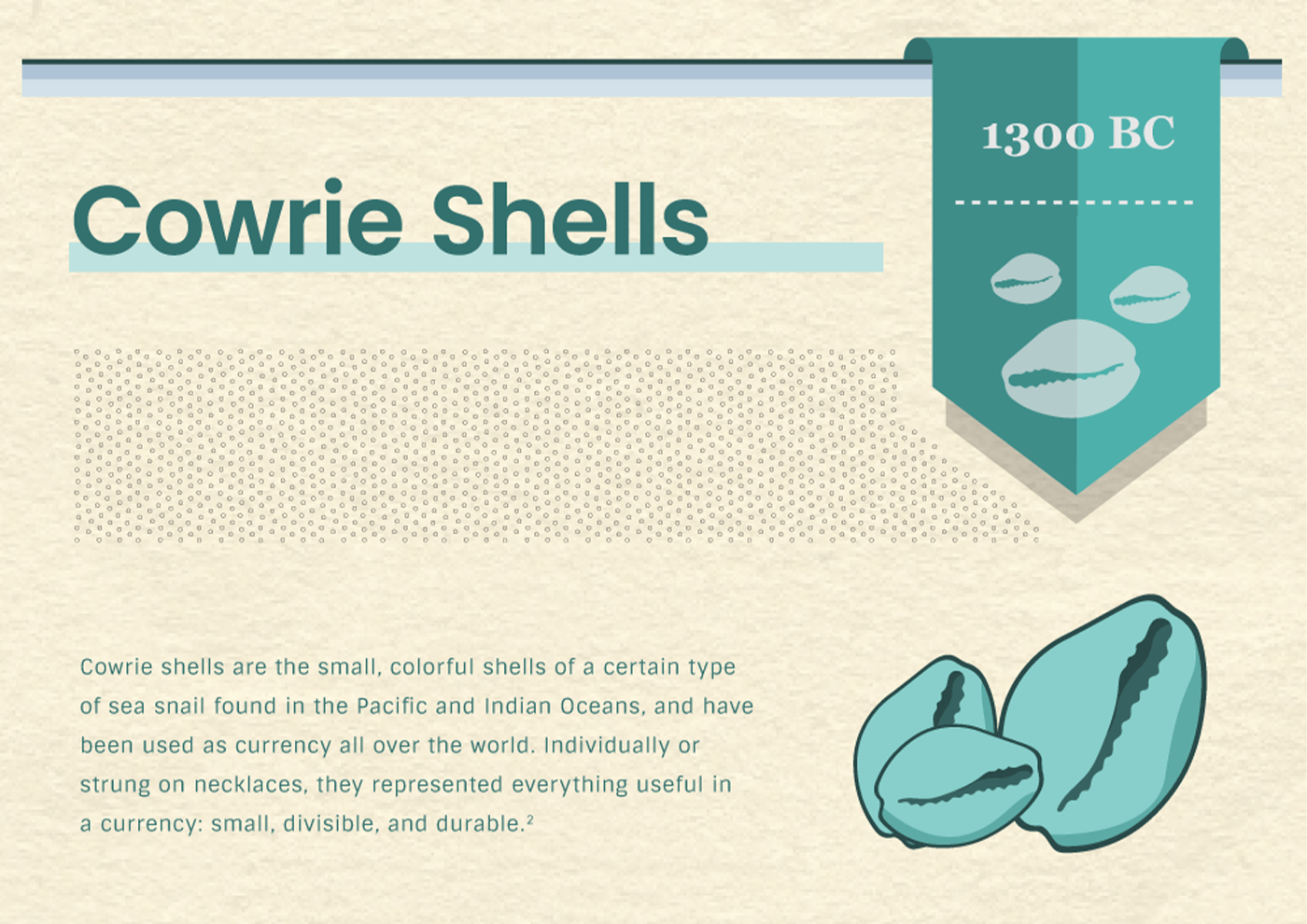
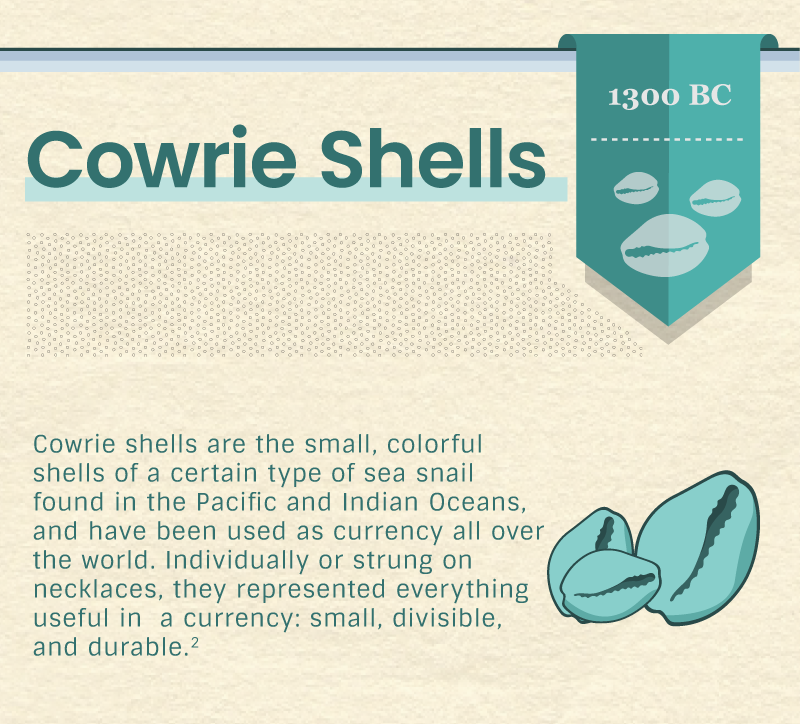
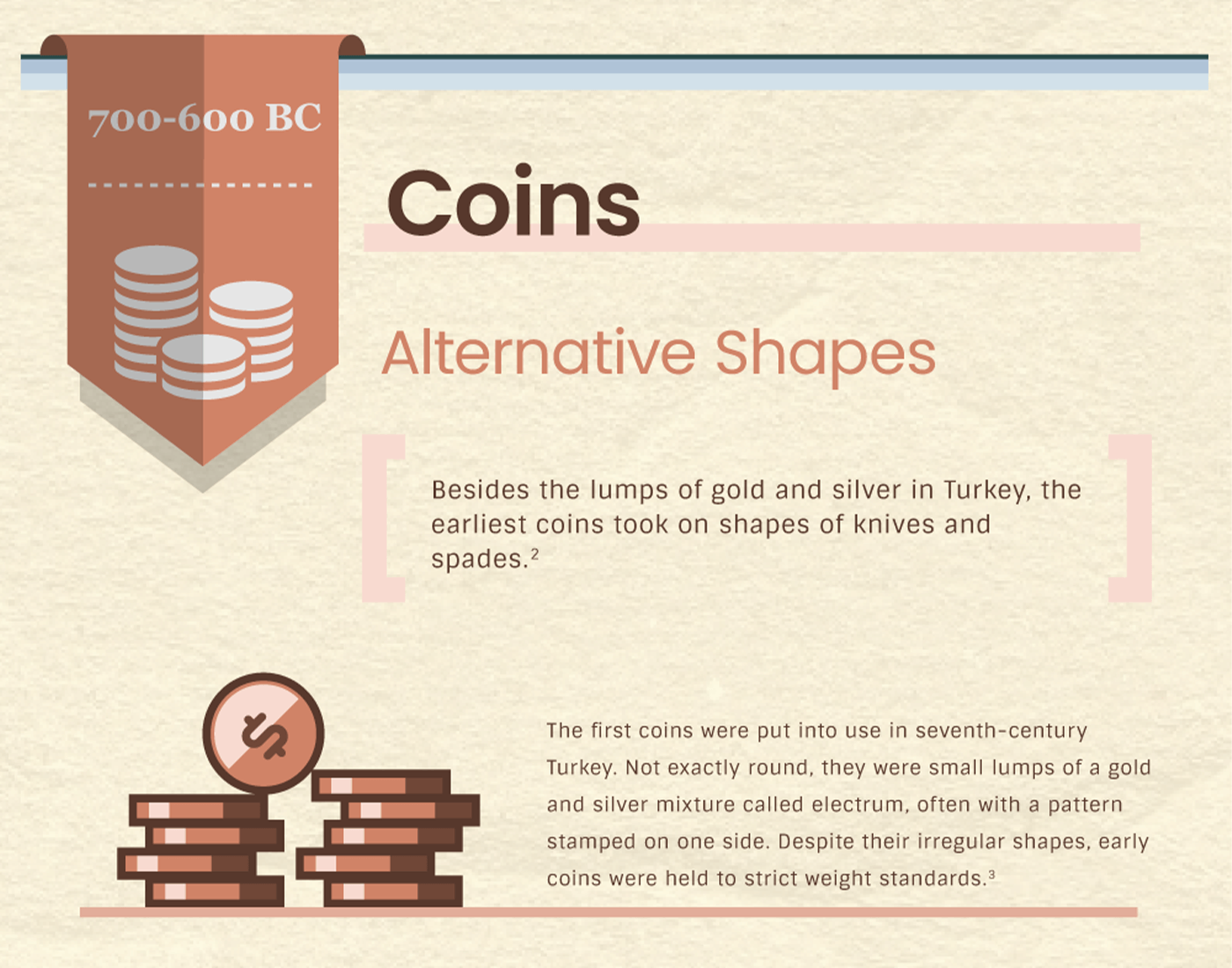
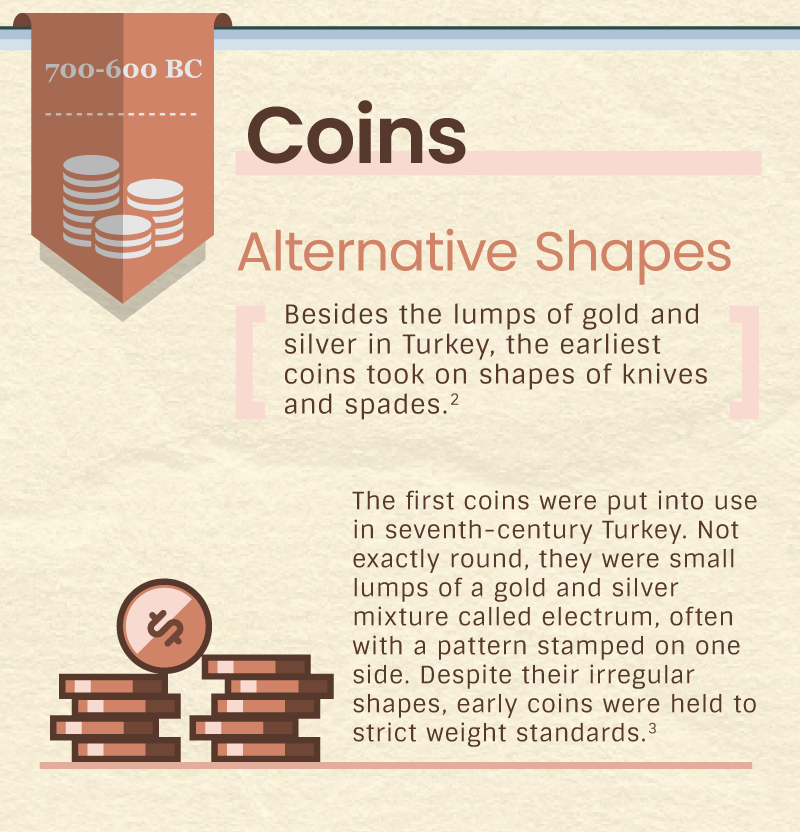
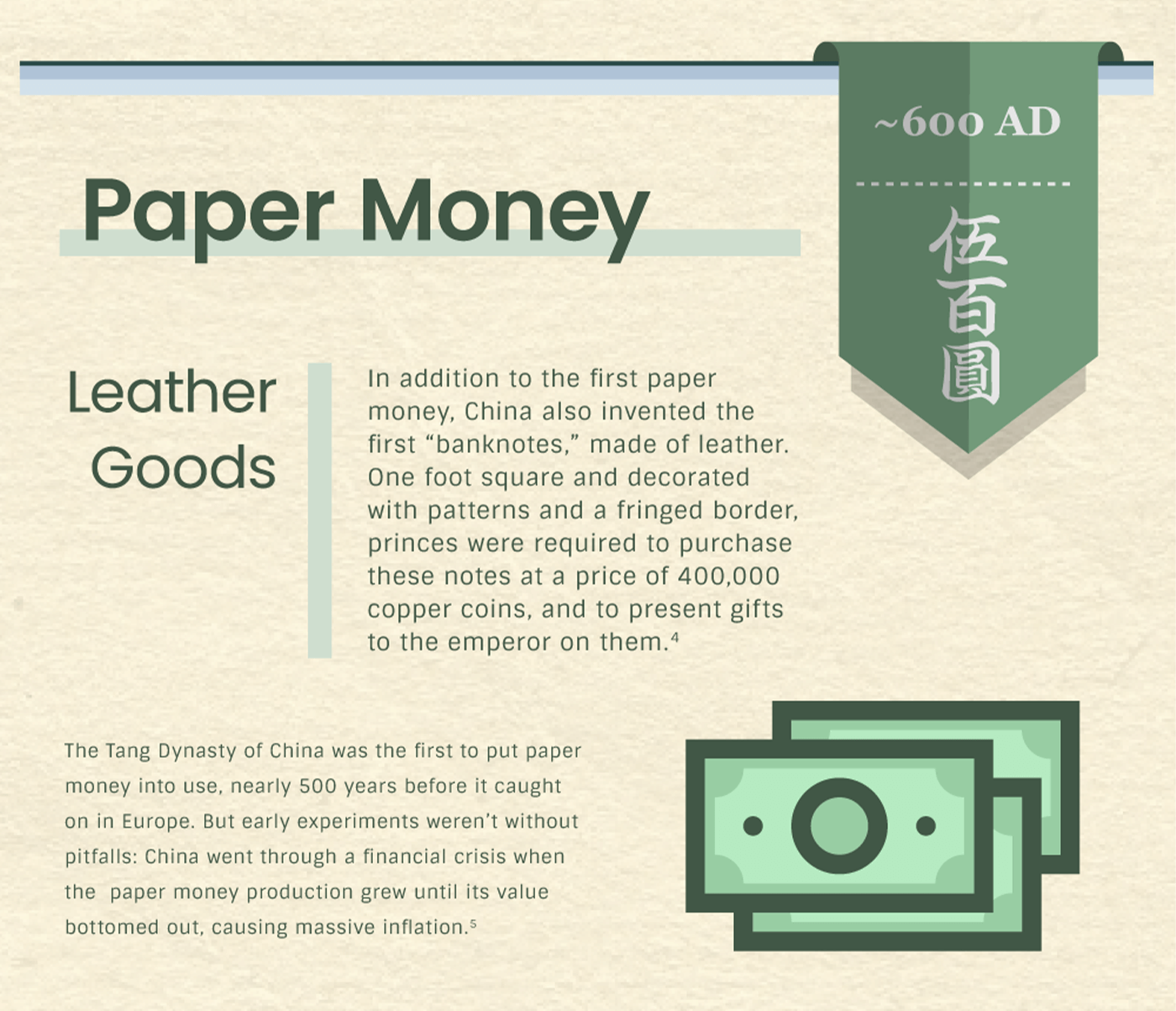
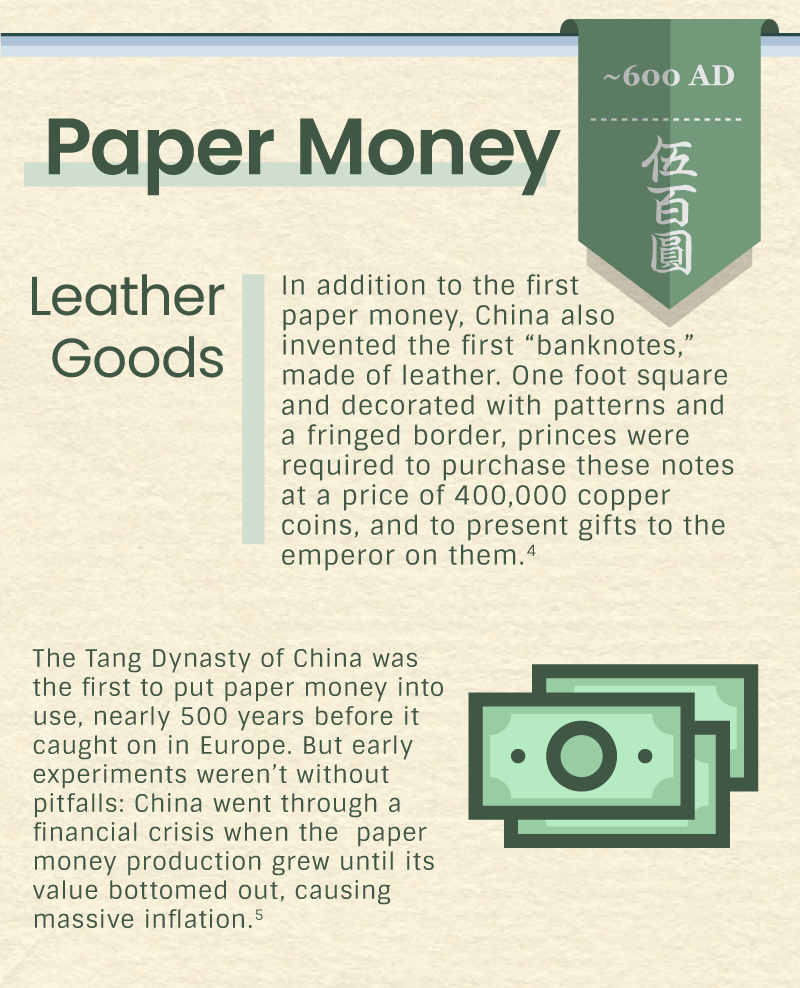
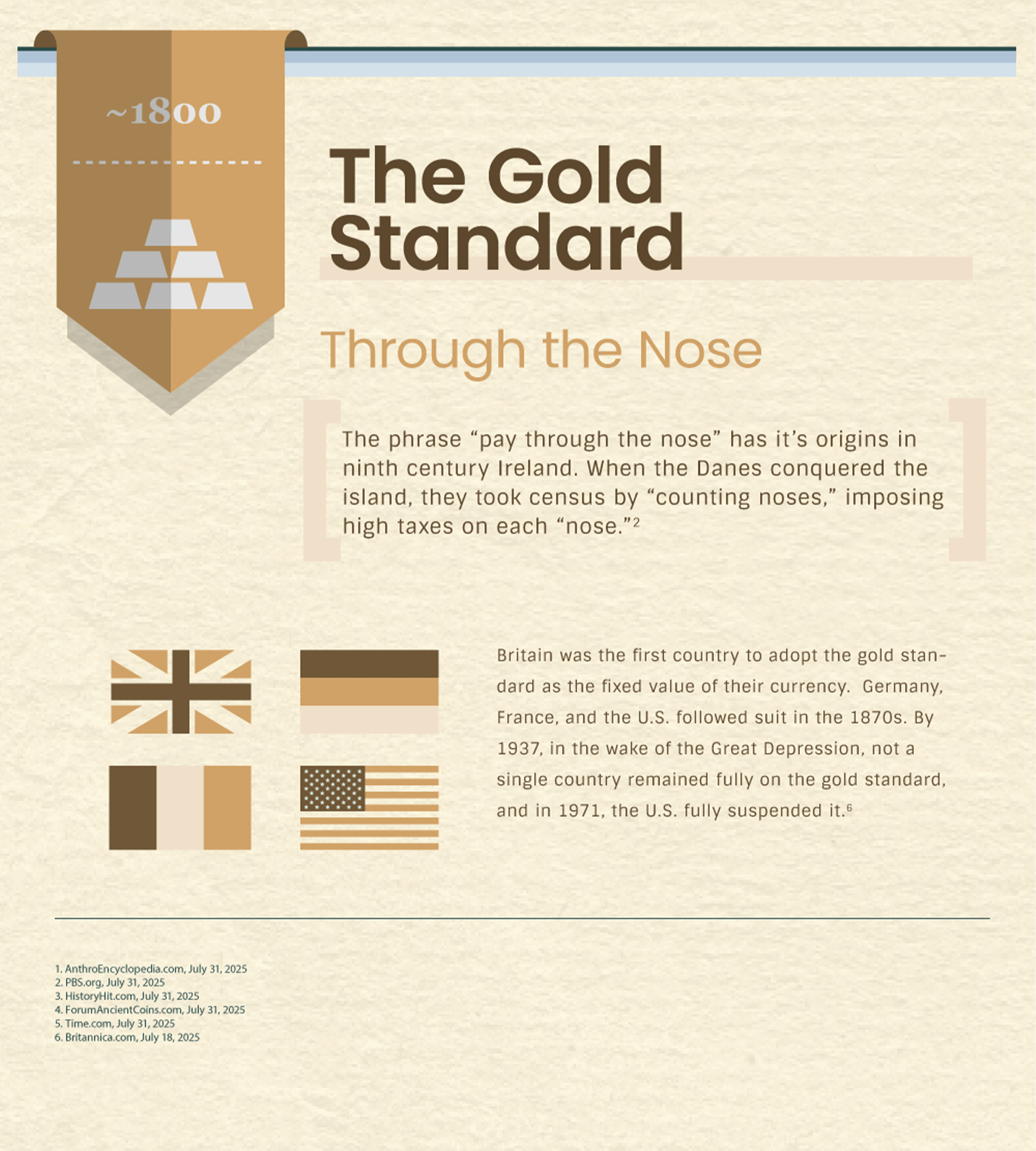
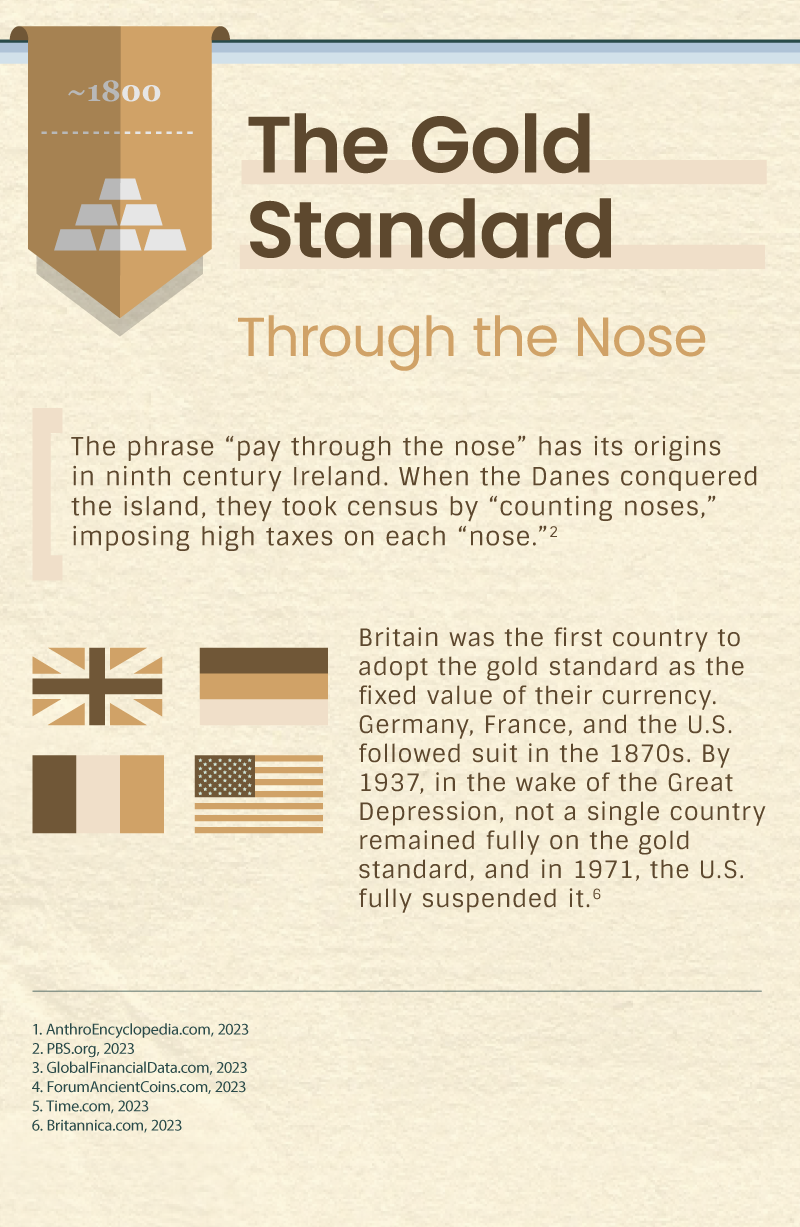
This is a History of Currency educational infographic with six sections on a beige background. The title reads: The History of Currency. A brief lesson on where currency has been and where it is going.This is a History of Currency educational infographic with six sections on a beige background. The title reads: The History of Currency. A brief lesson on where currency has been and where it is going.The first section, titled Livestock and Grain, covers the earliest use of currency around 9000 BC. It explains that, contrary to popular belief, bartering pre-dates other forms of currency, and is now seen as unlikely because it is extremely inefficient. Historically, bartering supplemented other forms of payment. With the rise of agriculture, animals such as cattle, sheep, camels, and sacks of grain were used as traditional stores of value. The text notes that cattle were called capitale in Latin, which is where the word capital comes from.The first section, titled Livestock and Grain, covers the earliest use of currency around 9000 BC. It explains that, contrary to popular belief, bartering pre-dates other forms of currency, and is now seen as unlikely because it is extremely inefficient. Historically, bartering supplemented other forms of payment. With the rise of agriculture, animals such as cattle, sheep, camels, and sacks of grain were used as traditional stores of value. The text notes that cattle were called capitale in Latin, which is where the word capital comes from.The second section, titled Cowrie Shells, highlights their first use as currency around 1300 BC. It states that cowrie shells are the small, colorful shells of a certain type of sea snail found in the Pacific and Indian Oceans. They were used as currency all over the world. Individually or strung on necklaces, they represented everything useful in a currency: small, divisible, and durable.The second section, titled Cowrie Shells, highlights their first use as currency around 1300 BC. It states that cowrie shells are the small, colorful shells of a certain type of sea snail found in the Pacific and Indian Oceans. They were used as currency all over the world. Individually or strung on necklaces, they represented everything useful in a currency: small, divisible, and durable.The third section, titled Coins, covers their first appearance between 700 and 600 BC. It notes that besides lumps of gold and silver in Turkey, the earliest coins took on shapes like knives and spades. The first coins were put into use in seventh-century Turkey. Not exactly round, they were small lumps of a gold and silver mixture called electrum, often with a pattern stamped on one side. Despite their irregular shapes, early coins were held to strict weight standards.The third section, titled Coins, covers their first appearance between 700 and 600 BC. It notes that besides lumps of gold and silver in Turkey, the earliest coins took on shapes like knives and spades. The first coins were put into use in seventh-century Turkey. Not exactly round, they were small lumps of a gold and silver mixture called electrum, often with a pattern stamped on one side. Despite their irregular shapes, early coins were held to strict weight standards.The fourth section, titled Paper Money, explains its introduction around 600 AD. It states that, in addition to the first paper money, China also invented the first banknotes, made of leather. These were one foot squares, decorated with patterns and a fringed border, and princes were required to purchase them at a price of 400,000 copper coins and to present gifts to the emperor on them. The Tang Dynasty of China was the first to put paper money into use, nearly 500 years before it caught on in Europe. However, early experiments caused problems: China went through a financial crisis when paper money production grew until its value bottomed out, causing massive inflation.The fourth section, titled Paper Money, explains its introduction around 600 AD. It states that, in addition to the first paper money, China also invented the first banknotes, made of leather. These were one foot squares, decorated with patterns and a fringed border, and princes were required to purchase them at a price of 400,000 copper coins and to present gifts to the emperor on them. The Tang Dynasty of China was the first to put paper money into use, nearly 500 years before it caught on in Europe. However, early experiments caused problems: China went through a financial crisis when paper money production grew until its value bottomed out, causing massive inflation.The fifth section, titled The Gold Standard, covers its first adoption around 1800. It notes that the phrase “pay through the nose” comes from ninth-century Ireland, where Danes took census by counting noses and imposing high taxes on each nose. Britain was the first country to adopt the gold standard as the fixed value of its currency. Germany, France, and the U.S. followed in the 1870s. By 1937, in the wake of the Great Depression, not a single country remained fully on the gold standard. In 1971, the U.S. fully suspended it.The fifth section, titled The Gold Standard, covers its first adoption around 1800. It notes that the phrase “pay through the nose” comes from ninth-century Ireland, where Danes took census by counting noses and imposing high taxes on each nose. Britain was the first country to adopt the gold standard as the fixed value of its currency. Germany, France, and the U.S. followed in the 1870s. By 1937, in the wake of the Great Depression, not a single country remained fully on the gold standard. In 1971, the U.S. fully suspended it.
 

Related Content

White Elephant Inheritance

White Elephant Inheritance

This article deals with how one might deal with a burdensome inheritance.

Introducing the 530A Accounts

Introducing the 530A Accounts

An article explaining 530A Accounts.

The Average American Budget

The Average American Budget

Learn about the average American budget in this fun and interactive piece.


Have A Question About This Topic?


Thank you! Oops!

What's My 2026 Tax Bracket?

Check out this handy reference of updated ranges from the IRS in case your designated bracket has changed.

How Big is Money?

Learn a little about worldwide currency in this fun infographic

Do Our Biases Affect Our Financial Choices?

Even the most seasoned investors have biases affecting their financial choices.

View all articles

Comparing Mortgage Terms

Compare different mortgage term lengths side by side to find the option that fits your budget.

How Compound Interest Works

Explore how compound interest can grow your money over time with this interactive tool.

What Rate Would I Need to Earn on My Savings?

Work backwards from your savings goal to find the rate of return you'd need to get there.

View all calculators

Jane Bond: Scaling the Ladder

Agent Jane Bond is on the case, uncovering the mystery of bond laddering.

Retirement Accounts When You Change Your Job

This video explores what to do with retirement accounts when you move on from your job.

Working With A Financial Professional

A financial professional is an invaluable resource to help you untangle the complexities of whatever life throws at you.

View all videos